The Heartbeat of Speed: Unpacking Formula One Engine RPMs and Their Power Quest
In the exhilarating world of Formula One, where milliseconds dictate victory and defeat, the engine is king. More than just a power source, the Formula One engine has always been a testament to engineering extremes, a finely tuned marvel pushing the boundaries of what's mechanically possible. Central to this relentless pursuit of performance is the concept of Revolutions Per Minute (RPM) – the sheer rotational speed at which these incredible machines operate. From ear-splitting, naturally aspirated screamers to today's complex hybrid power units, the history of the formula one engine is inextricably linked to its RPM capabilities, reflecting a continuous quest for more power, efficiency, and a delicate balance mandated by ever-evolving regulations.
Since its inception, Grand Prix racing has often limited engine capacity and specifications, but the underlying ambition has remained constant: generate maximum power. This article delves into the fascinating journey of F1 engine RPMs, exploring the technological breakthroughs that allowed for unprecedented speeds, the regulatory shifts that tamed them, and the intricate relationship between high revs, power output, and the constant evolution of motorsport's most crucial component.
The Relentless Pursuit of Power: The Golden Age of High RPMs
For much of Formula One's storied history, the path to greater power was straightforward: make the engine spin faster. The fundamental principle is elegant in its simplicity: a combustion engine generates power by converting fuel into kinetic energy through repeated explosions within its cylinders. The more times these explosions occur per second – i.e., the higher the engine's rotational speed or RPM – the more power the engine can theoretically produce. This direct correlation fueled a fierce engineering arms race, pushing designers to create engines capable of astonishingly high revolutions.
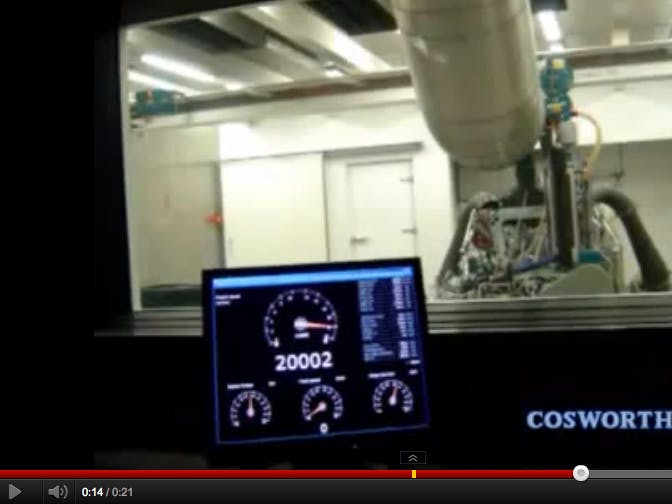
The early 2000s marked the zenith of this high-revving philosophy. During the 2004-2005 seasons, formula one engine RPMs soared to unprecedented heights, regularly exceeding 20,000 revolutions per minute. Imagine an engine completing 20,000 power cycles every 60 seconds – that's over 333 explosions per second! These were naturally aspirated V10 and V8 engines designed with a singular purpose: raw power. At this peak, designers pursued every marginal gain, even if it meant significant fuel consumption and prodigious waste heat. The prevailing wisdom was clear: the engine that produced the most power, regardless of its thirst or inefficiency, was the one that delivered victories.
The sound of these engines, a high-pitched, almost orchestral scream, became synonymous with Formula One itself, a visceral testament to the extreme engineering beneath the carbon fibre bodywork. This era showcased the pinnacle of mechanical extremism, where exotic materials and cutting-edge production methods were leveraged to extract every possible horsepower from an internal combustion engine operating at unimaginable speeds.
Technological Leaps: Overcoming Mechanical Barriers to Speed
Achieving such stratospheric RPMs was far from simple. Engineers faced formidable mechanical challenges, particularly concerning valve operation. Until the mid-1980s, formula one engines relied on traditional metal springs to close the valves after they were opened by the camshaft. These springs needed to be stiff enough to slam the valves shut at high speeds, preventing them from 'floating' open due to inertia – a phenomenon that could lead to catastrophic engine failure.
However, there was a critical limitation: as RPMs increased, the required stiffness of these metal springs skyrocketed. Stiffer springs, in turn, demanded more power from the engine just to drive the camshaft and open the valves. This led to a diminishing return scenario where the power required to operate the valve train began to significantly offset any power gains from increased engine speed. Consequently, engine speeds plateaued around 12,000 RPM, a ceiling imposed by the practical limits of metal spring technology.
The breakthrough arrived in 1986, courtesy of Renault, with the introduction of pneumatic valve springs. This revolutionary technology replaced traditional metal springs with cylinders filled with pressurised air. The genius of pneumatic springs lies in their inherently progressive rate: they provide an extremely high spring rate at larger valve strokes (when the valve needs to be closed quickly and firmly) without significantly increasing the power required to open them at smaller strokes. This innovation drastically reduced the power loss associated with valve train operation, effectively shattering the 12,000 RPM barrier. Since the 1990s, virtually every Formula One engine manufacturer has adopted pneumatic valve springs, enabling the astonishing RPM levels seen throughout subsequent decades and becoming a foundational element of high-performance internal combustion engine design.
The Evolution of Regulations: Balancing Power, Cost, and Relevance
While the quest for higher RPMs initially drove technological innovation, the escalating costs and the sport's desire for greater relevance led to a significant shift in philosophy. The bespoke, exotic materials and manufacturing processes required to sustain engines at over 20,000 RPM were prohibitively expensive. Furthermore, such extreme, fuel-inefficient designs offered little transferrable technology to road cars, making the sport seem increasingly disconnected from mainstream automotive development.
Recognising these issues, the FIA (Fédération Internationale de l'Automobile) began introducing regulations to cap maximum rotational speeds. This marked a deliberate move away from pure mechanical extremism towards a more balanced approach:
- 2007: The maximum RPM limit was set at 19,000 rpm.
- 2009: This was further reduced to 18,000 rpm.
- 2014-2021: With the introduction of the new hybrid era, the limit dropped to 15,000 rpm.
This progressive reduction in RPM limits didn't signal a decline in engineering prowess; rather, it redirected it. Engineers were now challenged to achieve immense power output with reduced engine speeds, placing a premium on thermal efficiency, turbocharging, and energy recovery systems. This shift culminated in the current generation of F1 Engines vs. Road Cars: Exploring the RPM & Power Divide. The modern formula one engine operates at significantly higher RPMs than a typical road car engine, which generally peaks below 6,000 rpm, but its peak RPM is considerably lower than its ancestors.
The current 1.6-litre V6 turbocharged hybrid power units, introduced in 2014, represent a pinnacle of efficiency and complex integration. Specifications for these power units, including their sophisticated control software, and even a maximum per-engine price of €15,000,000 for F1 teams, have been largely frozen since the 2023 season until the end of 2025. This stability aims to control costs and ensure a level playing field as the sport anticipates a completely new engine specification for the 2026 season, which promises further evolution in balancing power, sustainability, and technological relevance.
The Modern Formula One Engine: A Symphony of Efficiency and Power
Today's formula one engine, officially known as a "power unit," is a sophisticated assembly of a 1.6-litre four-stroke turbocharged 90-degree V6 double-overhead camshaft (DOHC) reciprocating engine, augmented by powerful energy recovery systems. While its maximum combustion engine RPM is capped significantly lower than the legendary screamers of the past, the overall power output of the modern F1 power unit is phenomenal, often exceeding 1,000 horsepower. This incredible figure is achieved through a combination of:
- Turbocharging: Recapturing energy from exhaust gases to force more air into the engine, dramatically increasing power density.
- Hybrid Technology: Integrating Motor Generator Units (MGU-H and MGU-K) that recover heat and kinetic energy, converting it into electrical power to be deployed for an instantaneous boost.
- Exceptional Thermal Efficiency: Modern F1 engines are among the most thermally efficient internal combustion engines ever created, converting a higher percentage of fuel energy into useful work.
This era showcases a different kind of engineering brilliance. It's not just about spinning faster, but about maximizing every joule of energy, managing complex hybrid systems, and creating a power unit that is not only ferociously fast but also remarkably efficient. The fixed specifications and price caps until 2026 are testament to the sport's commitment to sustainability and controlled development, laying the groundwork for the next generation of power units that will once again redefine the limits of motorsport engineering. The journey of the Formula One engine continues, ever-evolving, always pushing boundaries, and forever at the core of the sport's thrilling spectacle. For a deeper dive into their construction, read Unpacking F1 Engines: History, Current 1.6L V6 & Future Tech.
From the raw, high-pitched wail of engines revving past 20,000 RPM to the complex, efficient roar of today's hybrid power units, the formula one engine has undertaken an incredible evolutionary journey. This quest for power, initially driven by pure mechanical speed, has transformed into a sophisticated balance of RPMs, efficiency, energy recovery, and regulatory compliance. The story of F1 engine RPMs is a microcosm of the sport itself: a relentless pursuit of performance, constantly innovating, adapting, and setting new benchmarks for automotive engineering excellence, ensuring that the heart of Formula One continues to beat with unparalleled intensity.