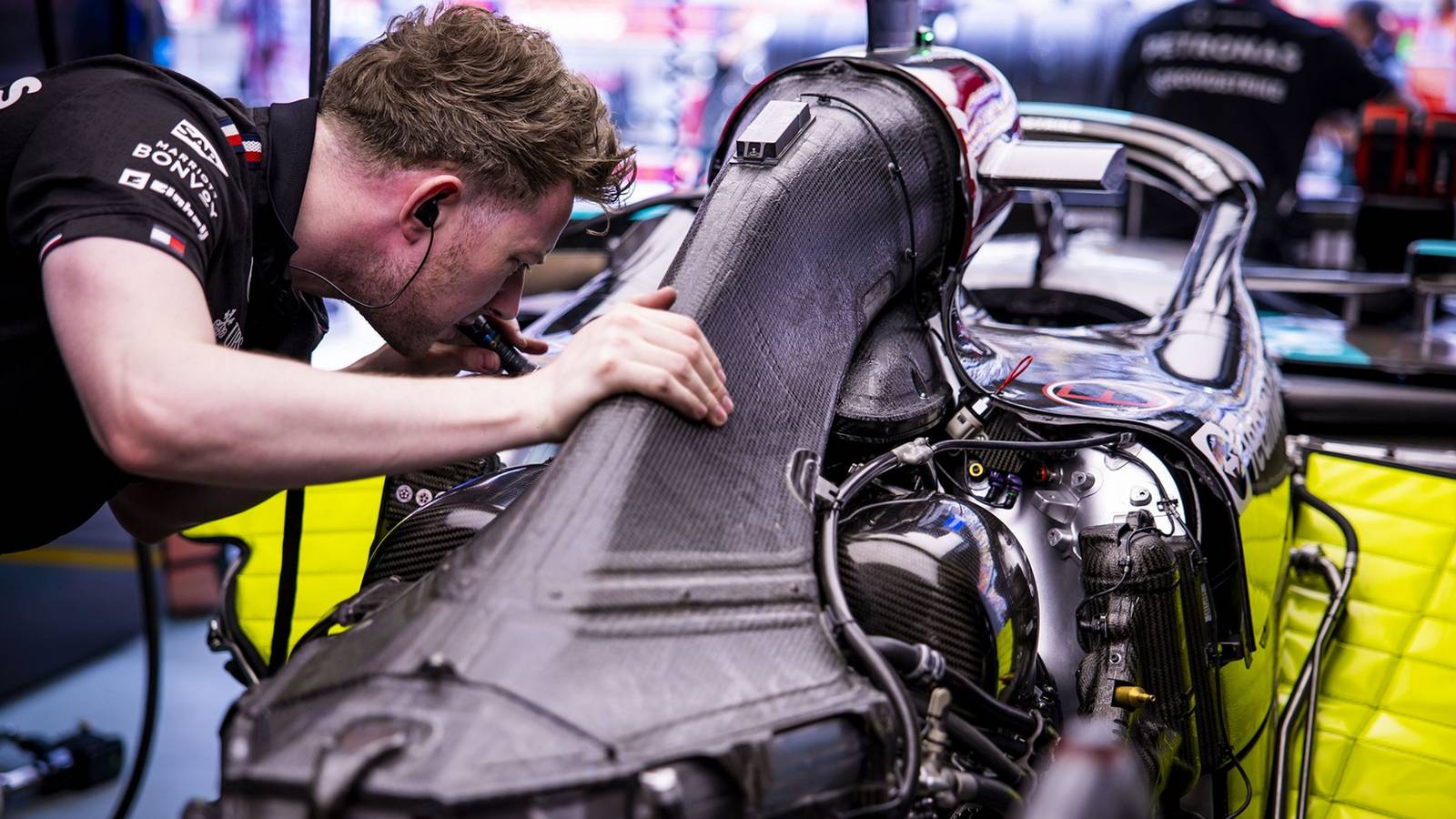
The Heart of the Beast: Understanding the Formula One Engine
At the pinnacle of motorsport, the formula one engine, now officially known as the F1 power unit, represents the zenith of internal combustion engineering blended with cutting-edge hybrid technology. Since its inception in 1947, Formula One has been a crucible for automotive innovation, with engine regulations constantly evolving to push boundaries in performance, efficiency, and sustainability. This journey has seen everything from large-displacement naturally aspirated powerplants to the highly sophisticated, compact turbocharged V6 units of today.
Currently, Formula One power units are engineering marvels: 1.6-litre, four-stroke, turbocharged 90-degree V6 reciprocating engines with double-overhead camshafts (DOHC). Introduced in 2014, these units are not merely engines but complex hybrid systems incorporating Motor Generator Units (MGU-H and MGU-K) that recover energy from heat and braking. This integration transforms what was once a pure internal combustion engine into a "power unit," a distinction that highlights the comprehensive energy management strategy at play. While their design specifications have seen continuous refinement, their development has been strategically frozen until the end of 2025, with a maximum price cap of €15,000,000 per engine for F1 teams, underscoring their immense complexity and bespoke nature.
RPM: The Quest for Ultimate Power and Its Evolution
The history of the formula one engine has been an relentless pursuit of power, and for decades, the primary pathway to achieving this was through staggering rotational speeds – Revolutions Per Minute (RPM). The theoretical principle is simple yet profound: an engine produces roughly double the power when operated twice as fast, assuming thermal efficiency and energy losses remain constant. This understanding drove F1 engineers to chase ever-higher RPM ceilings, turning engines into screaming symphonies of power.
The High-Rev Era: Pushing the Limits
The early 2000s marked the zenith of F1's high-revving era, with engines routinely exceeding 20,000 RPM during the 2004-2005 seasons. This wasn't just about speed; it was about maximizing the number of power strokes per second, unleashing an unparalleled amount of horsepower from relatively small displacement engines. The sheer mechanical stresses, extreme temperatures, and lubrication challenges involved in sustaining such speeds demanded exotic materials, micron-level precision manufacturing, and revolutionary design solutions that pushed the boundaries of material science and engineering.
The Role of Pneumatic Valve Springs
A significant bottleneck in the quest for higher RPMs historically was the valve train, specifically the springs responsible for closing the valves. Until the mid-1980s, traditional metal springs limited F1 engines to around 12,000 RPM. Beyond this, the inertia of the valvetrain components combined with the stiffness required for metal springs to close valves quickly enough became prohibitively high. The power required to overcome these stiffer springs to open the valves began to offset any power gains from increased RPM. The breakthrough came in 1986 with Renault's introduction of pneumatic valve springs. By utilizing pressurized air instead of metal coils, these systems offered a progressive rate, providing immense closing force at high valve lift without significantly increasing the power required to drive the camshaft at smaller strokes. This ingenious solution effectively liberated engine designers, allowing for the extreme RPMs that defined later F1 eras. By the 1990s, pneumatic valve springs became standard across all Formula One engine manufacturers.
Regulation-Driven RPM Caps
While the allure of ever-higher RPMs was undeniable, the escalating costs associated with the exotic materials and production methods required, coupled with the realization that such advancements offered little practical benefit for production vehicles (due to the inherent inefficiency and expense), led to a shift in regulatory philosophy. Beginning in 2007, the FIA introduced maximum RPM limits: an initial cap of 19,000 RPM, further reduced to 18,000 RPM in 2009, and finally to 15,000 RPM for the 2014-2021 seasons. These regulations were instrumental in steering F1 engine development away from raw, high-revving power towards efficiency, energy recovery, and hybrid integration, setting the stage for the complex power units we see today.
The Stark Divide: F1 Engine RPM vs. Road Car Realities
The chasm between a formula one engine and a typical road car engine, particularly concerning RPM and power delivery, is immense and rooted in vastly different design philosophies and objectives. While both convert fuel into motion, their operational envelopes and desired outcomes diverge dramatically.
Engineering Marvels vs. Everyday Practicality
Modern F1 engines, even with their regulated 15,000 RPM ceiling (and historical peaks over 20,000 RPM), contrast sharply with road car engines of similar displacement. A typical road car engine, designed for longevity, fuel economy, and broad drivability, rarely operates above 6,000 RPM, with many performance models pushing towards 8,000-9,000 RPM as their redline. This difference is not arbitrary. F1 engines are designed for maximum instantaneous power output, reliability over very short, intense periods (a few races per unit), and within highly specific performance parameters. They prioritize horsepower at high RPMs, often sacrificing low-end torque or broad power bands that are crucial for a street-legal vehicle.
Consider the stresses: at 15,000 RPM, a piston travels up and down 250 times every second. Components are subjected to incredible G-forces, requiring materials like advanced alloys, titanium, and carbon fibre composites, along with precision machining to tolerances far exceeding those found in even premium road cars. Lubrication systems, cooling strategies, and fuel delivery are optimized for extreme conditions, not for stop-and-go traffic or a 100,000-mile warranty.
Beyond RPM: Power Output and Lifespan
While the 1.6-litre F1 V6 engine may seem small, its specific output is phenomenal, delivering well over 1000 horsepower in total (combining internal combustion and hybrid elements). This translates to over 600 horsepower per litre, a figure that dwarfs most road car engines. A high-performance road car engine might achieve 100-150 horsepower per litre, showcasing the F1 engine's extraordinary efficiency in generating power relative to its size.
However, this comes at a significant cost in terms of lifespan. A formula one engine is expected to last only a handful of race weekends, accumulating perhaps a few thousand kilometres before requiring extensive overhauls or replacement. Conversely, a typical road car engine is designed to last for hundreds of thousands of kilometres with minimal maintenance beyond routine servicing. This difference highlights the fundamental trade-off between absolute performance and long-term durability and cost-effectiveness.
Cost and Complexity
The cost difference is staggering. While the specific price cap for F1 engines is €15,000,000 for teams, the actual development cost for manufacturers runs into hundreds of millions. This is starkly different from the engine in your average road car, which, while a marvel of mass production, costs a fraction of that figure to manufacture. The intricate hybrid systems, the bespoke materials, the software controlling every millisecond of operation, and the relentless R&D involved in F1 power units simply don't translate to the consumer market in the same way. The only trickle-down effect might be in general engine management strategies or advanced material science that eventually finds more cost-effective applications.
The Future of Formula One Engines and Road Car Relevance
The future of the formula one engine, with new regulations slated for 2026, promises further evolution towards sustainable fuels and even greater electrification, while potentially simplifying certain complex hybrid elements like the MGU-H. This ongoing evolution continues to push the boundaries of what internal combustion combined with electric power can achieve. While the extreme RPMs of the past may not return, the lessons learned from high-efficiency combustion, advanced energy recovery, and sophisticated material engineering undoubtedly inform future road car development, albeit in a highly diluted and adapted form.
Conclusion
The disparity in RPM and power between a formula one engine and a road car engine is a testament to two distinct worlds of automotive engineering. One is a no-holds-barred quest for ultimate performance on the racetrack, pushing every boundary of physics and materials science, often with scant regard for cost or long-term durability. The other is a complex balancing act of performance, efficiency, longevity, cost, and environmental responsibility designed for the daily driver. Both are incredible feats of engineering, but they serve entirely different purposes, creating a fascinating divide that continues to captivate enthusiasts and engineers alike.