Unpacking F1 Engines: History, Current 1.6L V6 & Future Tech
At the very heart of Formula 1's unparalleled speed and technological prowess lies its engine. More accurately referred to as a "power unit" since the groundbreaking hybrid era began in 2014, this marvel of engineering has consistently pushed the boundaries of automotive performance. From its early days in the formative years of Grand Prix racing to today's incredibly complex and efficient systems, the evolution of the formula one engine reflects a relentless quest for power, efficiency, and ultimately, victory.
A Legacy of Power: The Evolving History of Formula One Engines
The journey of the Formula One engine is a captivating saga marked by shifting regulations and a perpetual drive for more horsepower. Grand Prix racing, even before the official F1 championship in 1950, frequently imposed limits on engine capacity. Yet, within these constraints, engineers found ingenious ways to extract every ounce of performance.
The Golden Age of RPMs and the Quest for Unbridled Power
For much of its history, the guiding principle was simple: higher rotational speed (RPM) equated to more power. Theoretical physics supports this, suggesting that doubling an engine's operating speed could theoretically double its power output, assuming thermal efficiency and energy losses remain constant. This belief fueled an arms race in the pits, leading to engines that screamed at astonishing RPMs. The early 2000s, particularly the 2004-2005 seasons, saw F1 engines revving beyond 20,000 revolutions per minute – a sound that was both deafening and awe-inspiring, a true testament to mechanical limits being stretched to their breaking point.
However, this pursuit of stratospheric RPMs came at a significant cost. The exotic materials and cutting-edge production methods required to sustain such speeds were astronomically expensive. Moreover, the technology, while spectacular, offered little relevance to mass-produced road vehicles due to its inherent inefficiency and impracticality. This realization, coupled with skyrocketing budgets, prompted the sport's governing body to introduce limits on maximum rotational speed:
- 2007: Maximum revs capped at 19,000 rpm.
- 2009: Further reduced to 18,000 rpm.
- 2014-2021: Settled at 15,000 rpm for the new hybrid power units.
These limits marked a shift, forcing teams to focus on other areas of performance, primarily efficiency and energy recovery, rather than just raw RPM. To delve deeper into this high-speed quest, explore our dedicated article on F1 Engine RPMs: The High-Speed Quest for Power & Evolution.
Pneumatic Valve Springs: A Revolutionary Leap
A crucial technological breakthrough enabling these incredible RPMs was the advent of pneumatic valve springs. Until the mid-1980s, traditional metal springs were the standard, but they posed a significant barrier. To close valves reliably at higher RPMs, increasingly stiff metal springs were needed. This, in turn, demanded more power to drive the camshafts that opened the valves, eventually reaching a point where the power lost to operate the valve train nearly negated any power gain from increased RPMs. The practical limit was around 12,000 rpm.
The game changed in 1986 when Renault pioneered the introduction of pneumatic valve springs. Using compressed air instead of metal coils, these systems offered an inherently progressive rate. This meant they could provide extremely high spring rates at larger valve strokes (when closing the valve at high speed) without significantly increasing the power required at smaller strokes, thus dramatically reducing overall power loss. The innovation was so profound that by the 1990s, virtually every Formula One engine manufacturer had adopted pneumatic valve springs, cementing their place as a foundational technology for high-revving internal combustion engines.
The Hybrid Revolution: Current 1.6L V6 Turbocharged Power Units
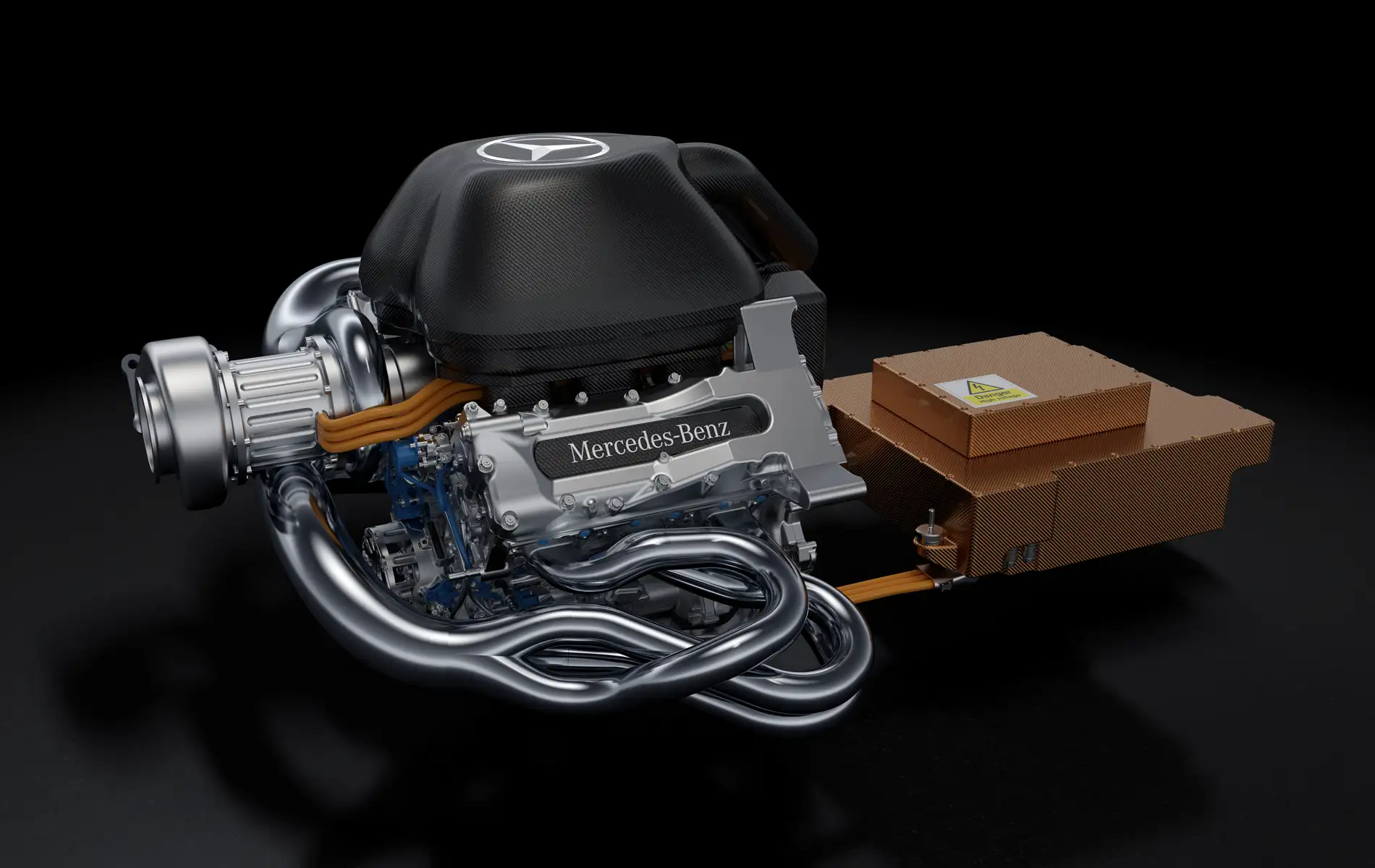
The 2014 season ushered in the most radical transformation in the history of the formula one engine, officially rebranding it as a "power unit." This shift wasn't merely semantic; it represented a fundamental re-engineering of the entire propulsion system, prioritizing energy efficiency and hybrid technology alongside raw power. The current specifications are a testament to cutting-edge engineering:
- Engine Type: 1.6 litre, four-stroke, 90-degree V6, double-overhead camshaft (DOHC) reciprocating internal combustion engine.
- Forced Induction: Single turbocharger.
- Hybrid Components: Critically, these power units integrate sophisticated energy recovery systems (ERS), including:
- MGU-K (Motor Generator Unit – Kinetic): Recovers kinetic energy from braking and converts it into electrical energy, which can then be deployed for an extra power boost or stored in the battery.
- MGU-H (Motor Generator Unit – Heat): Recovers thermal energy from the exhaust gases, spinning the turbocharger (or being spun by it) to either generate electrical energy or eliminate turbo lag by keeping the turbo spooled.
- Fuel Flow Limit: A strictly regulated maximum fuel flow rate encourages efficiency.
- RPM Limit: Capped at 15,000 rpm.
These power units, developed and refined over subsequent seasons, are not just powerful but also astonishingly efficient. While a typical road car engine achieves around 30-35% thermal efficiency, current F1 power units exceed 50%, making them some of the most thermally efficient internal combustion engines ever created. This stark contrast highlights the vast difference in engineering philosophy and performance, as explored further in F1 Engines vs. Road Cars: Exploring the RPM & Power Divide, where F1 engines operating at 15,000 rpm dramatically outpace typical road car engines rarely exceeding 6,000 rpm.
The Engine Freeze and Cost Control
From the 2023 season onwards, Formula 1 implemented a significant engine freeze. This means specifications for these complex power units, including critical software controls, are locked in until the end of 2025. This regulation serves multiple purposes:
- Cost Control: It significantly curtails the spiralling development costs associated with constant iteration and improvement.
- Performance Convergence: By freezing development, it aims to narrow the performance gap between manufacturers, leading to tighter, more competitive racing.
- Preparation for Future Regulations: It allows manufacturers to shift focus and resources towards the design and development of the next generation of power units for 2026.
Furthermore, to manage financial outlays for independent teams, a maximum per-engine price of €15,000,000 has been instituted, providing a degree of financial predictability in an otherwise incredibly expensive sport.
The Future of Formula One Engines: 2026 and Beyond
The horizon of Formula 1 racing is already set on 2026, when a completely new specification for the power unit will come into effect. These upcoming regulations are designed to align F1 with global sustainability trends, attract new manufacturers, and further enhance the spectacle of racing. While final details are always subject to refinement, the core pillars of the 2026 formula one engine are expected to be:
- Increased Electrical Power: The electrical component of the power unit is set to play a much more significant role, aiming for a closer to 50/50 split between internal combustion and electrical power delivery. This means even more potent energy recovery and deployment systems.
- Sustainable Fuels: A major shift will be the mandatory use of 100% sustainable fuels. These fuels, derived from non-fossil sources, will make the internal combustion engine truly carbon-neutral, proving F1's commitment to environmental responsibility while retaining the thrill of high-performance engines.
- Simplified Turbo-Hybrid Architecture: To reduce complexity and cost, and to improve road relevance, it is widely anticipated that the MGU-H component will be removed. This move is expected to attract new manufacturers who might have been deterred by the immense technical challenge and cost of developing the MGU-H.
- Continued V6 Architecture: The V6 internal combustion engine is likely to remain, but with revisions to optimize it for the new balance with increased electrical power and sustainable fuels.
These changes are a strategic move to ensure Formula 1 remains at the pinnacle of motorsport and automotive innovation. By emphasizing sustainability and attracting new manufacturers like Audi and Ford (in partnership with Red Bull Powertrains), F1 aims to secure its future, driving technological advancements that could one day trickle down into consumer vehicles, much like its innovations have done in the past.
Conclusion
The formula one engine, now a sophisticated "power unit," has been on an incredible journey from its foundational roots to its current hybrid marvels and beyond. It embodies the relentless pursuit of performance, constantly evolving under the crucible of stringent regulations and technological ambition. From the high-revving screamers of the past to today's remarkably efficient and powerful V6 turbo-hybrids, and into a future powered by sustainable fuels, the F1 power unit remains the ultimate testbed for automotive engineering. It's a symphony of mechanical precision, electronic intelligence, and human ingenuity, continuing to define what's possible at the cutting edge of speed and innovation.